

Product design
Energy management platform
Revolutionising corporate energy management through Smart Analytics.
Product details
🎯 Summary
I designed a cutting-edge energy management platform tailored for large corporate campuses to intelligently track, analyse, and optimise energy supply and consumption across a multi-source ecosystem. Through real-time insights, predictive analytics, and actionable recommendations, the solution enabled organisations to meet sustainability goals, reduce operational costs, and extend asset longevity by creating a smarter, greener workplace.
💊 Problem statement
Large corporate campuses operate within complex energy environments characterised by:
-
Diverse energy supply sources (local grid, diesel backup, PPAs, solar, net metering)
-
Varying consumption patterns across departments and infrastructure
-
Pressure to reduce carbon emissions and align with global ESG commitments
-
High utility expenses due to inefficiencies and lack of real-time visibility
-
Limited predictive capabilities leading to costly downtime and inefficiencies
The challenge was to build a centralized, intelligent system that brings clarity and control to this complexity—transforming energy from a cost center into a strategic asset.
🎻 Role and team
- I was the Design lead on this product supported by designers from the partner company.
-
Led end-to-end product strategy, user experience architecture, and data visualisations
-
Collaborated with the product team, energy domain experts, IoT engineers, facility managers and data experts
-
Partnered with facilities and sustainability teams to map user needs to platform features
-
Ensured human-centric design principles for high adoption and impact
🧠 Approach
I followed a systems-thinking and data-first approach to design a holistic energy management solution.
-
I mapped out the entire supply-consumption ecosystem, from source integration to load centers
-
Identified user personas across operations, sustainability, and engineering functions
-
Designed a real-time, modular dashboard to surface insights across time, location, and energy types
-
Incorporated predictive models for demand forecasting and equipment maintenance
-
Focused on actionability—not just visibility—by embedding recommendation engines for optimization
-
Prototyped visualizations to convey CO₂ impact, cost efficiency, and consumption hotspots clearly
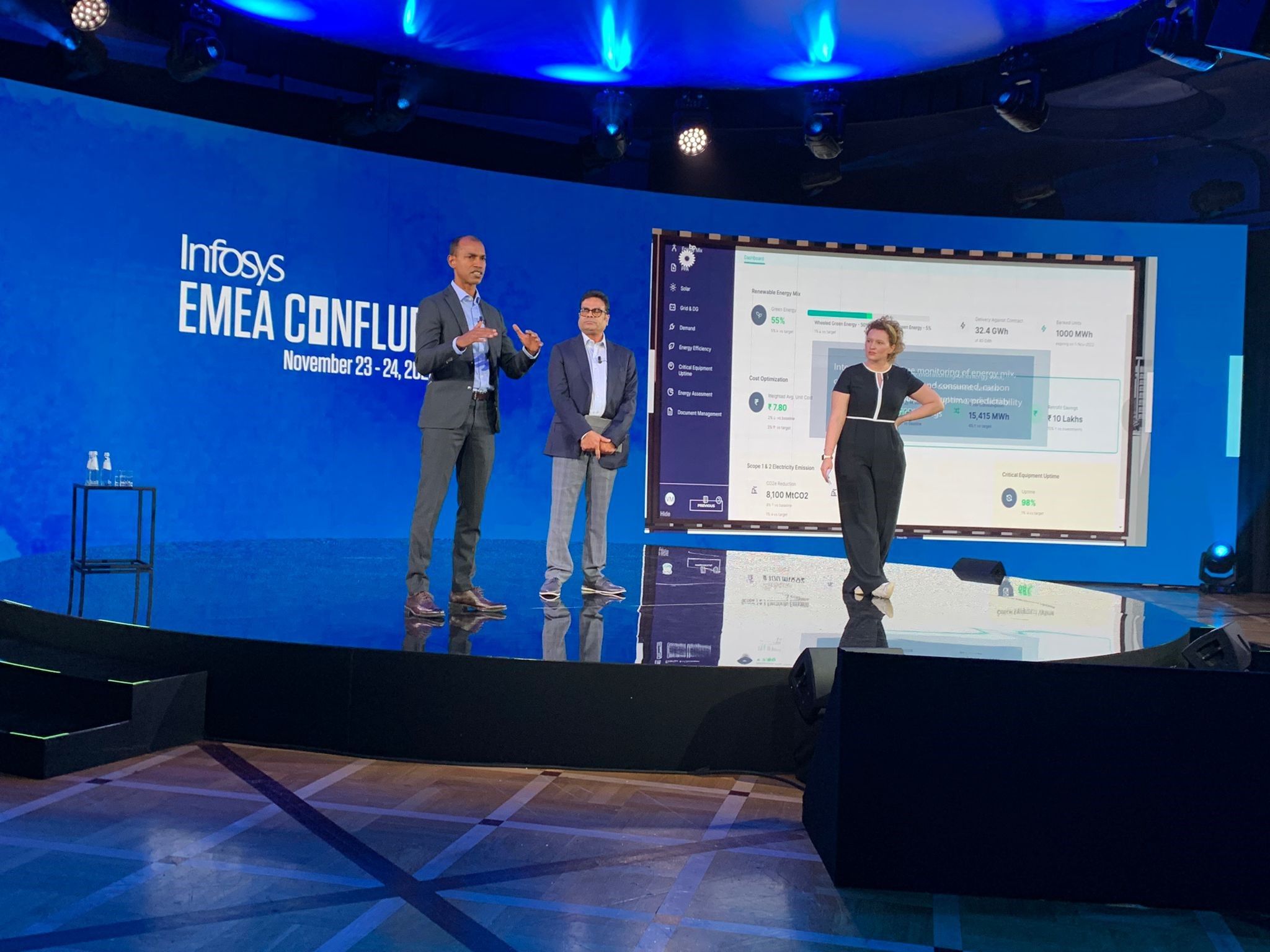
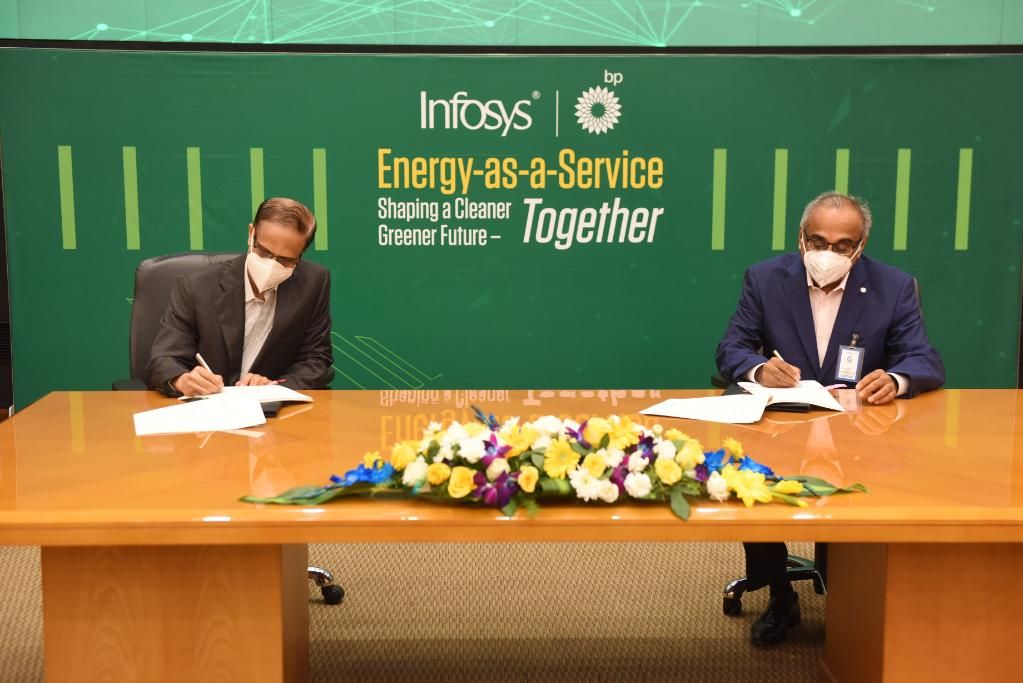
😓 Challenges
-
-
Data fragmentation across sensors, meters, and procurement contracts
-
High dimensionality of real-time data requiring aggregation and simplification
- Manual data entry and consolidation across systems and disparate data sources.
- Designing for both expert users (energy analysts) and non-technical staff (facility managers)
-
Aligning predictive analytics models with visual cues and explainable recommendations
-
Creating an interface that respects the urgency of operational decisions while supporting deep insights
-
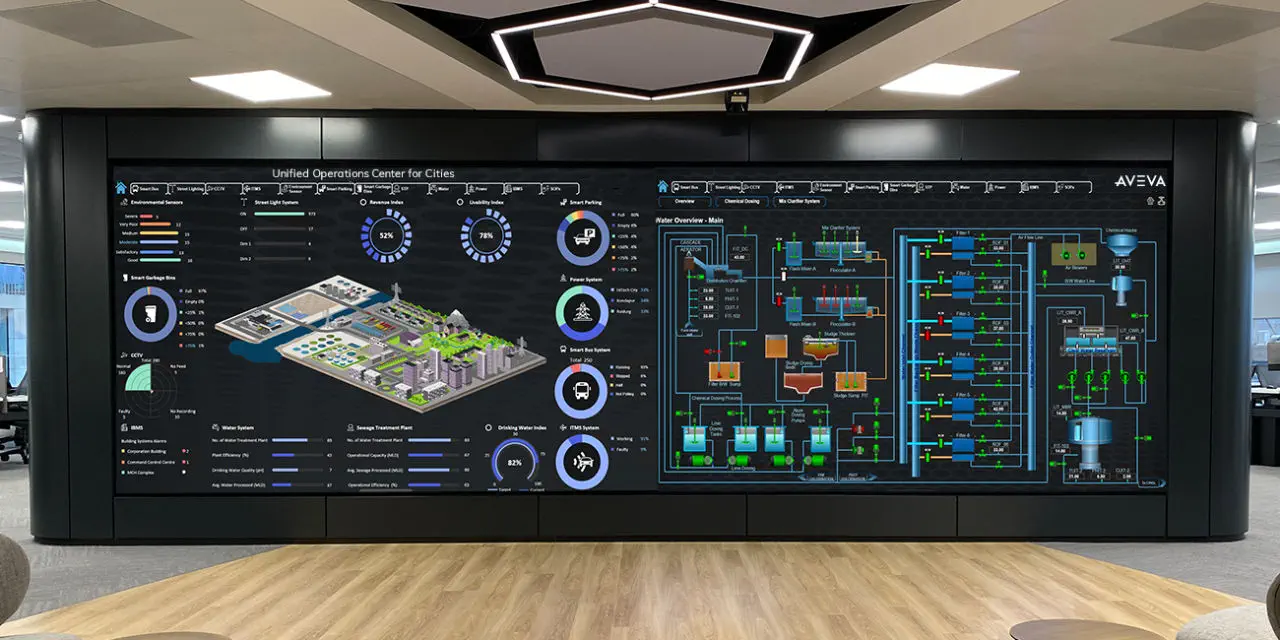
*Sample BMS image used for representation purposes only. A similar large scale custom BMS was implemented.
👌🏼 Solution
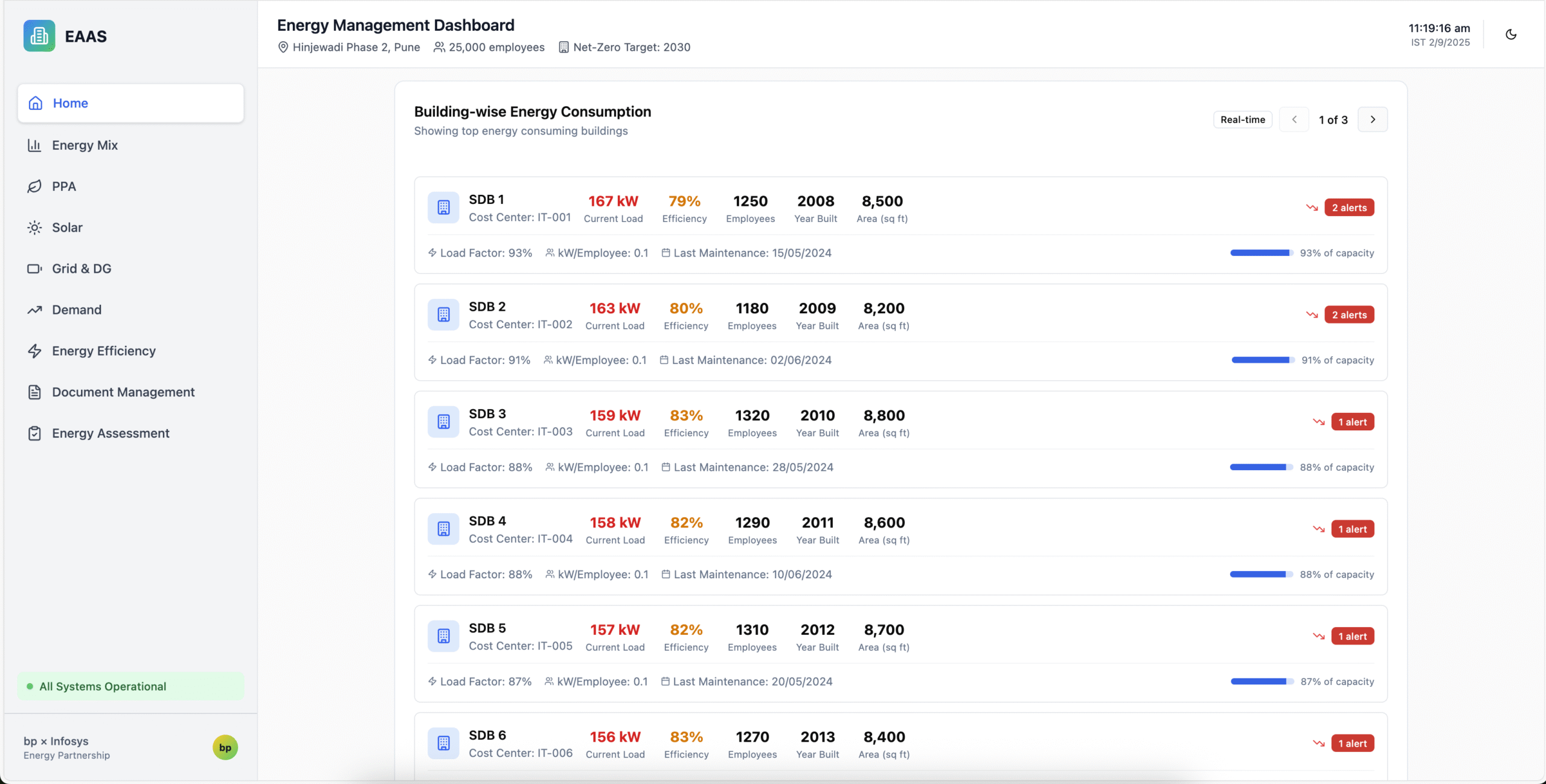
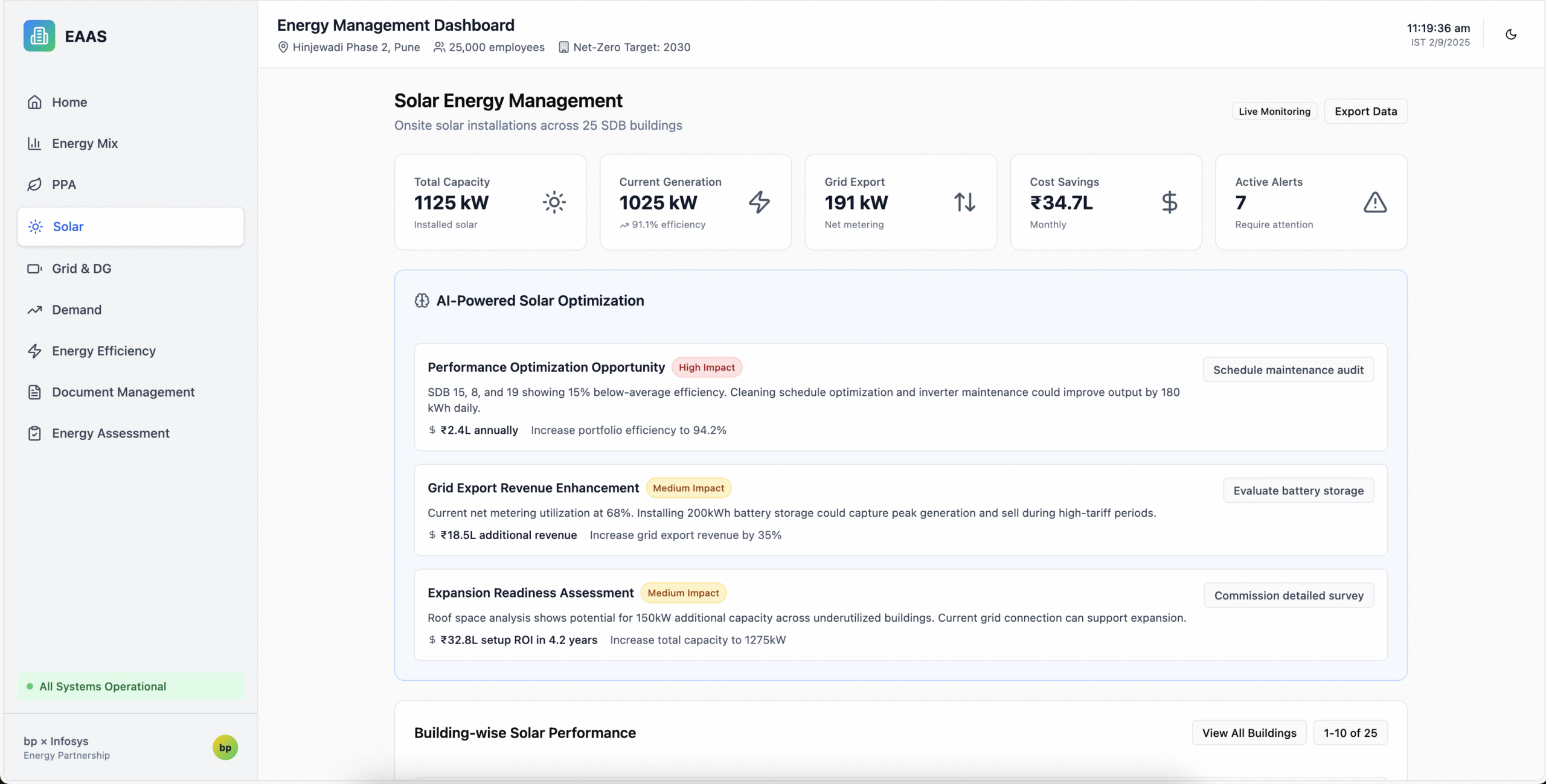
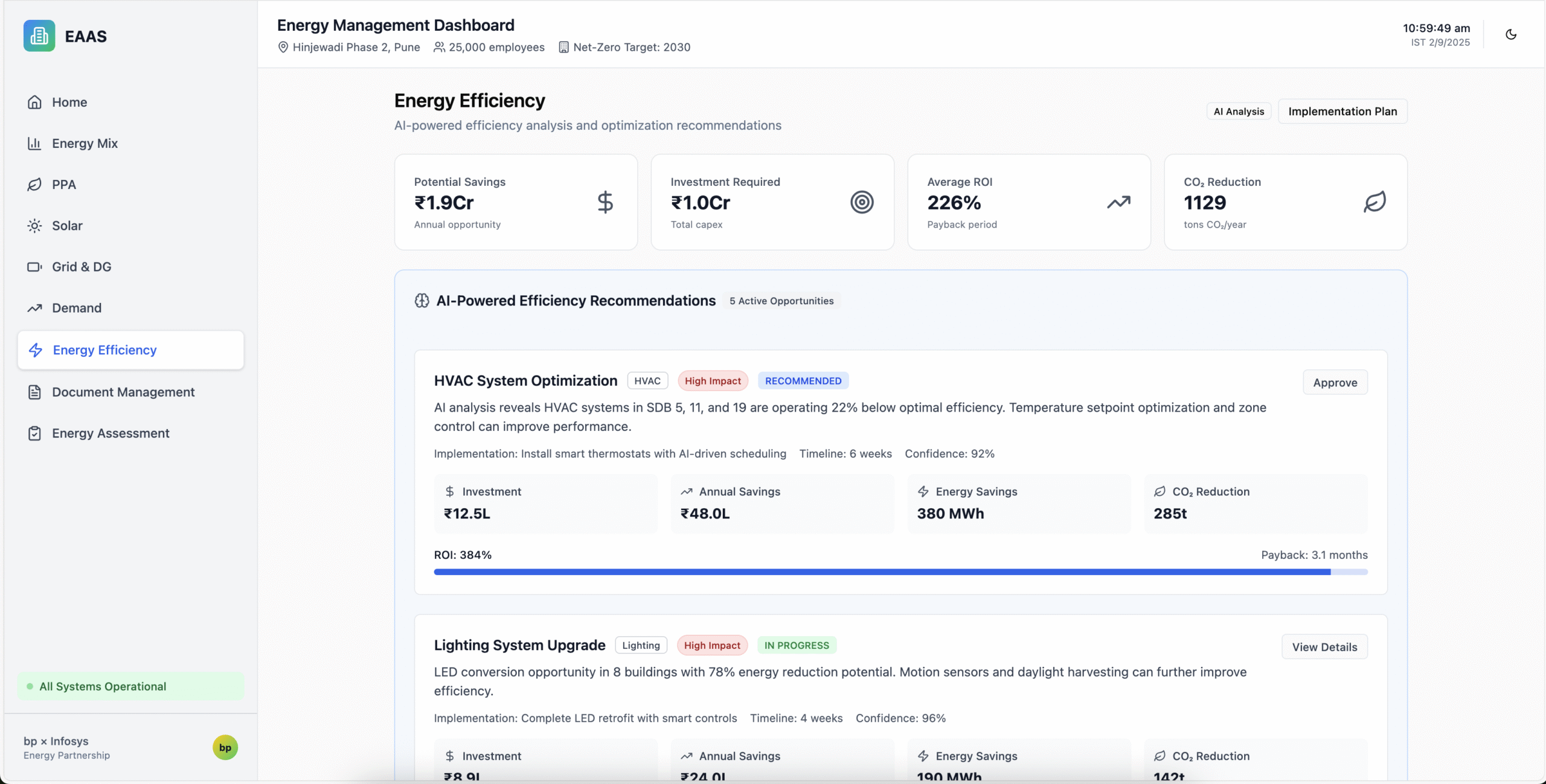
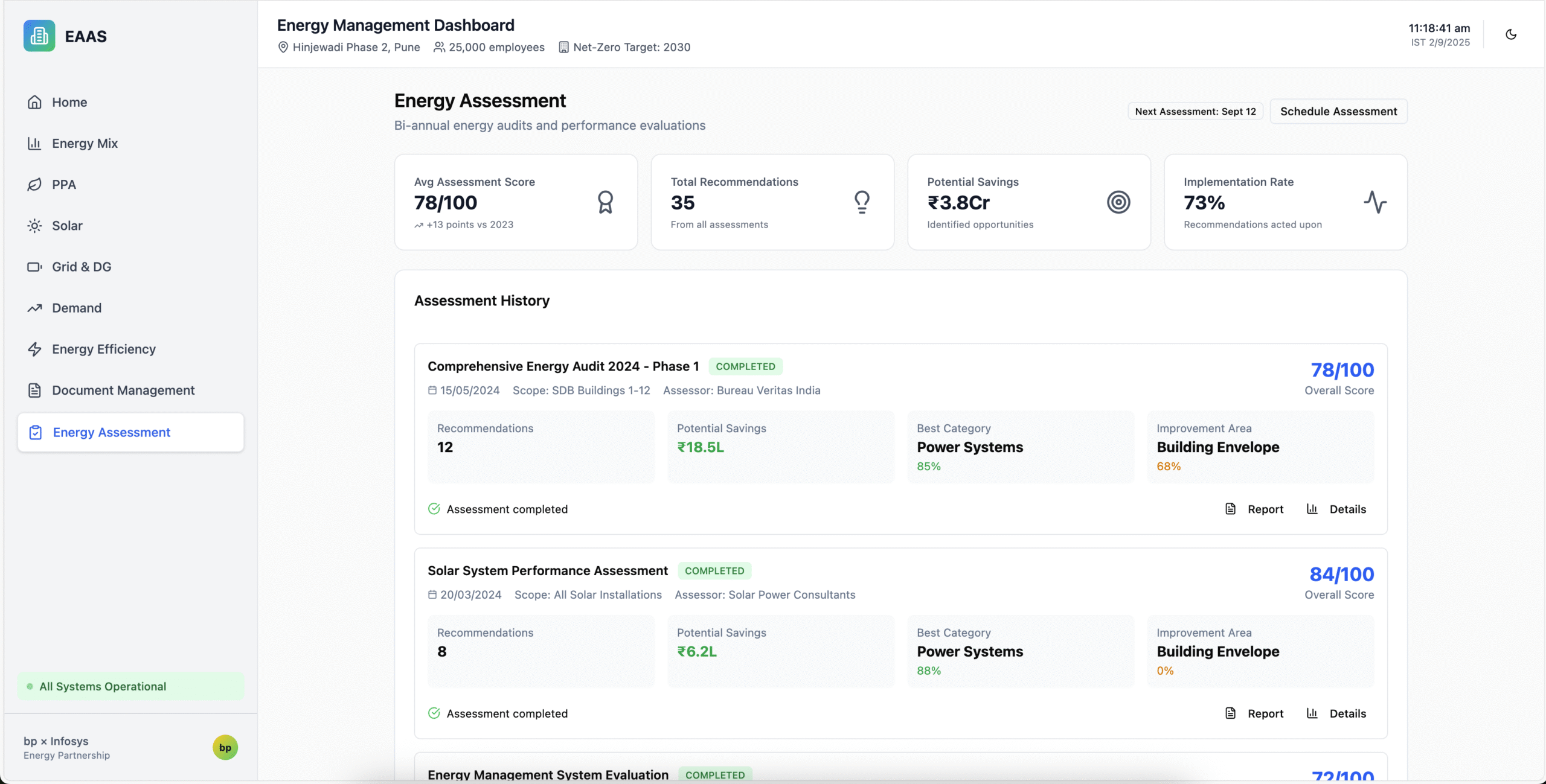
I delivered a unified, intelligent Energy Management as a Service (EMaaS) platform with the following core features:
📊 Centralized Dashboard with 11 Core Modules:
- Live Energy Mix Overview (grid, solar, diesel, PPA)
- Consumption by Source and Zone (HVAC, lighting, server rooms, elevators)
- Real-time CO₂ Emission Tracker
- Predictive Maintenance Alerts
- Peak Load Forecasting & Optimization Suggestions
- Cost Efficiency Heatmap
- Off-Peak Opportunity Finder
- Energy Benchmarking Across Buildings
- Solar Generation vs. Demand Curve Overlay
- Net Metering Feedback Loop
- Recommendations Feed for operational efficiency
-
-
Data fragmentation across sensors, meters, and procurement contracts
-
High dimensionality of real-time data requiring aggregation and simplification
-
Designing for both expert users (energy analysts) and non-technical staff (facility managers)
-
Aligning predictive analytics models with visual cues and explainable recommendations
-
Creating an interface that respects the urgency of operational decisions while supporting deep insights
-
Results & Impact
(Estimated)
- We went from 0 to 3 customers and the design was a key differentiating factor
-
20–30% reduction in peak-hour consumption through actionable insights
-
15% increase in renewable utilization, maximizing PPA and solar output
-
20% cut in diesel generator usage by intelligently managing fallback triggers
-
Reduction in CO₂ emissions equivalent to 600 tons/year
-
Improved equipment health, reducing unplanned maintenance events by ~25%
-
Enhanced cross-team collaboration through unified data view and aligned KPIs
The platform fundamentally shifted how energy was perceived—from a back-office expense to a core lever of performance and sustainability.
Other products

Biofuels compliance
Role
Expereince design lead
Contribution
Designed a universal, scalable ingestion interface capable of adapting to evolving document formats.
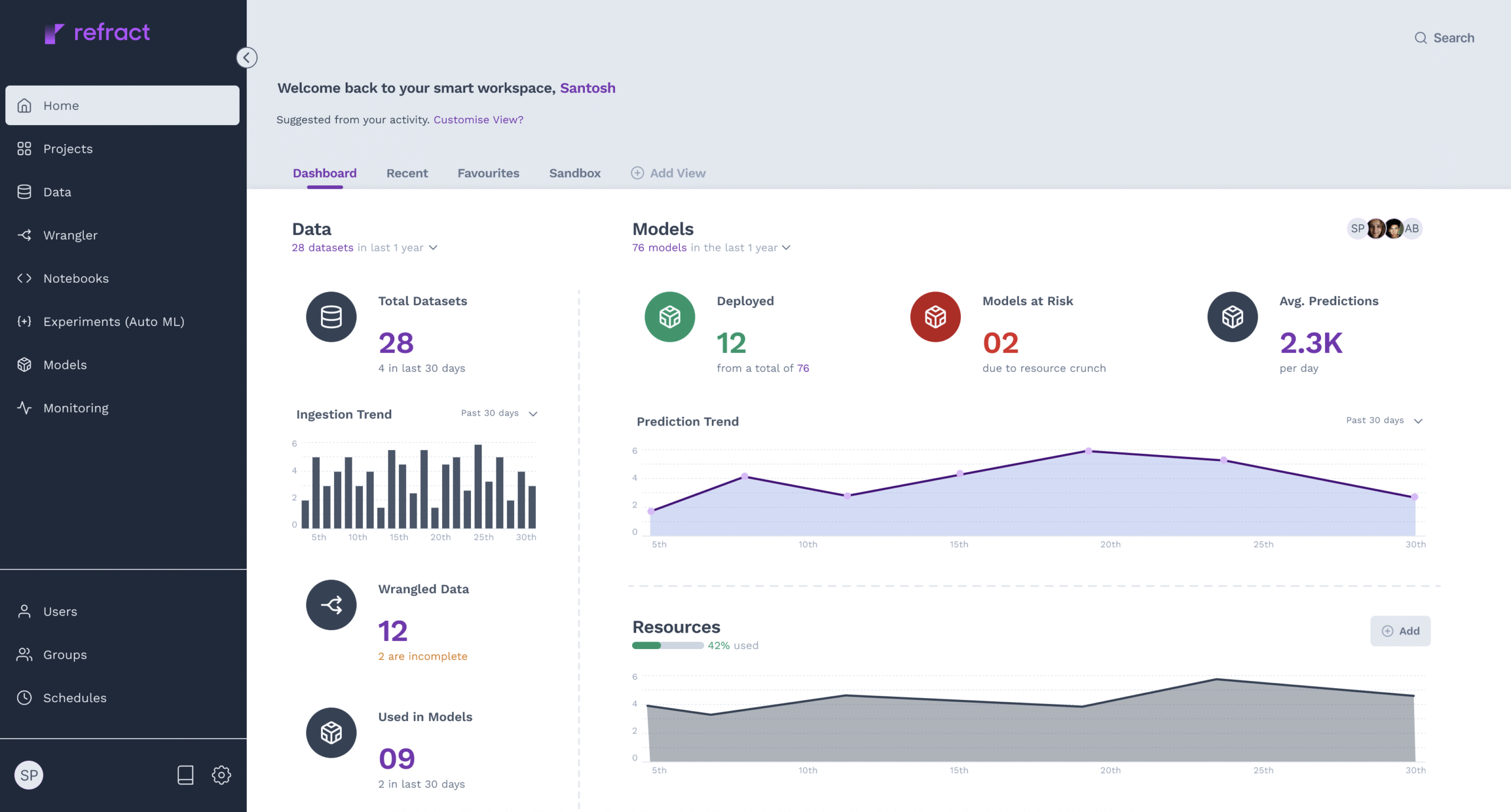
ML Ops data platform
Role
Head of Product Design
Contribution
Built the design team, conceptualised the redesign of this modern ML ops data platform based on UX audit and workflow issues.