

Product design
Navigation analytics
The platform facilitated the collection of diverse data points across multiple segments, with the objective of boosting revenue through upselling promoted content on navigation screens aimed at aiding both internal teams and external OEM partners.
Product details
🎯 Summary
I designed and brought to life a robust analytics platform that transforms fragmented IoT and navigation data into actionable intelligence for product managers and OEM partners. Built with a deep understanding of user pain points and existing solution gaps, the platform empowers users to gain real-time product insights, reduce research time from days to minutes, and unlock revenue opportunities through behavior-based analytics.
💊 Problem statement
Navigation product stakeholders struggled with:
- Disparate reporting systems: Data scattered across OEM logs, app usage stats, and third-party IoT feeds
- Slow strategic cycles: Synthesizing data for roadmap decisions took hours to days
- Lack of cross-segment clarity: Hard to compare performance across devices, regions, or firmware versions
- Minimal insight into promoted content revenue opportunities
The absence of a unified view limited the ability to act quickly on usage trends, reduce churn, or optimize monetization strategies.
🎻 Role and team
Lead designer on the team.
- Conducted in-depth competitive benchmarking (TomTom, Inrix, SmartCar dashboards, etc)
- Defined user personas, use cases, and KPI hierarchies
- Collaborated with PMs, IoT data engineers, developers from Lineate and product analysts
- Created end-to-end journey maps, wireframes, and interaction prototypes
During the alpha release design monitored the the Operational Efficiency Percentage metric, ensuring measurable ROI from design interventions
Team Composition:
- 1 Product designer
- 2 Frontend engineers
- 1 Data engineer
- 1 Product Manager
- 2 Backend engineers
🧠 Approach
I followed a data-first, role-based dashboard strategy optimized for discovery, exploration, and decision support.
Key activities
-
User Journey Mapping: Charted user’s workflow from event detection to strategic action
-
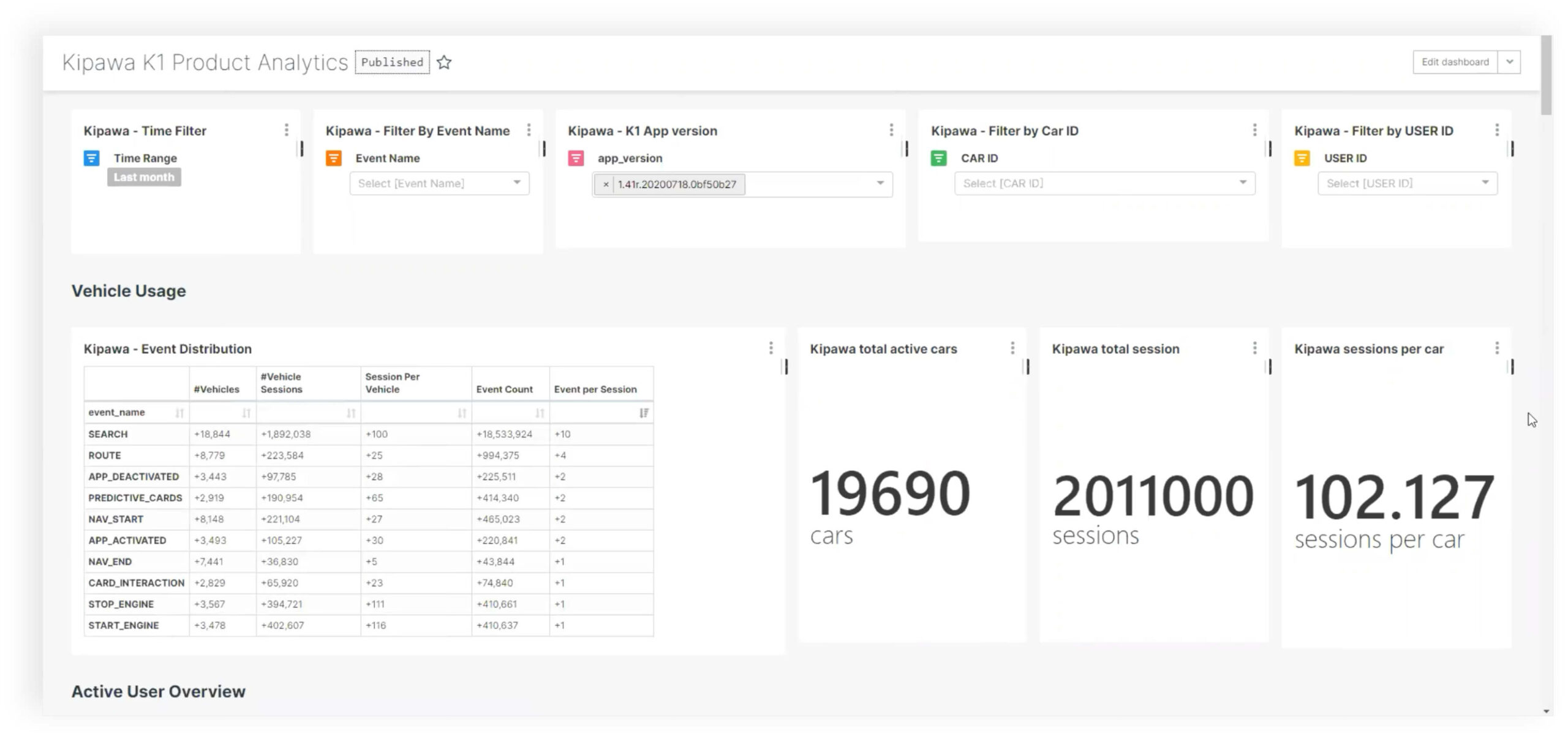
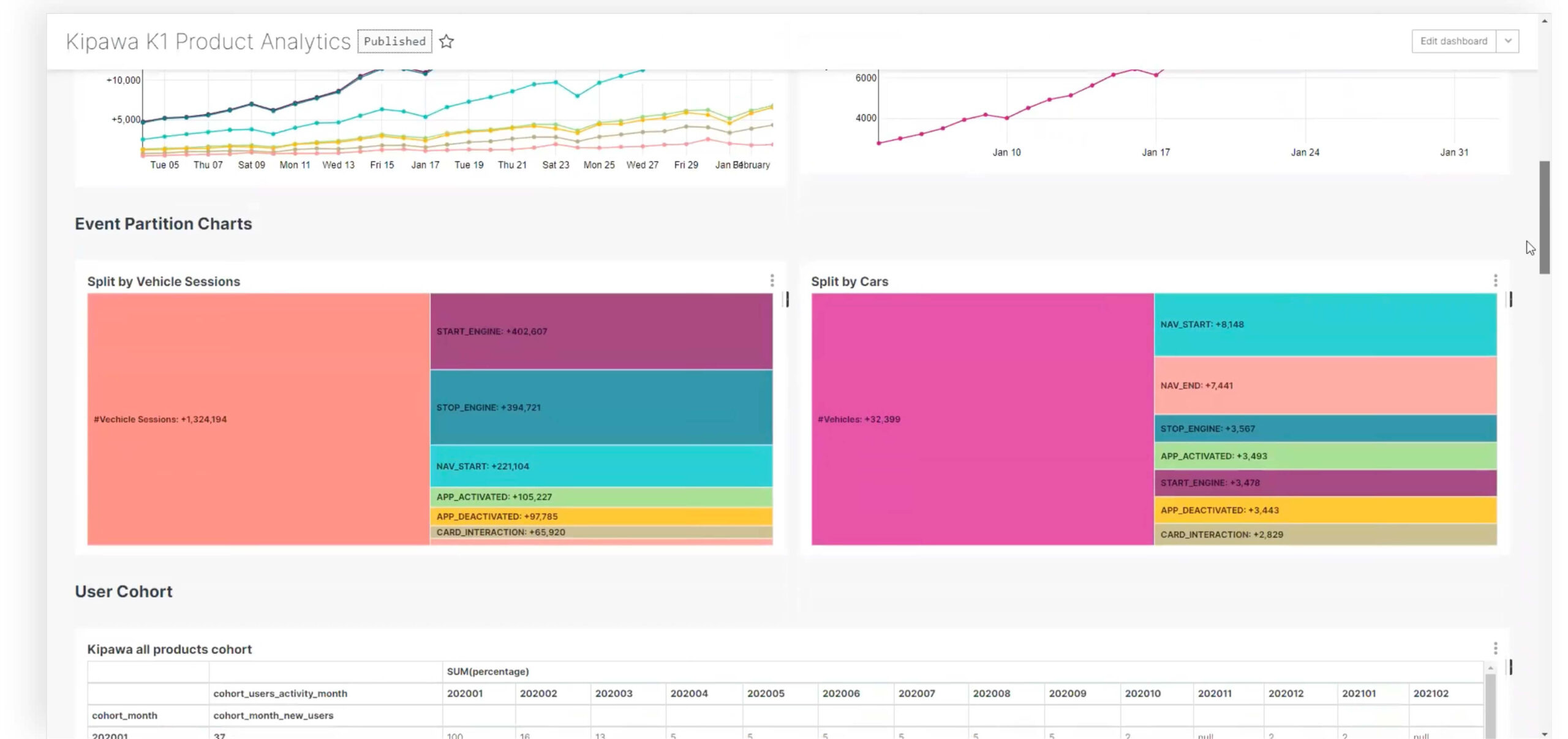
Modular Dashboard Architecture: Designed components for system usage, regional performance, content interaction, and user segmentation
-
Real-Time Event Layer: Prioritized the “Event Overview” as the landing metric—users could instantly see anomalies, top segments, and volume trends
-
Filtering & Drill-down: Designed quick and smart filters (time, region, firmware version, device model) and multi-level drill-downs
-
Expiremented with behavioral insight cards: Added smart-generated nudges like - “Usage of promoted routes surged in Orange county after software version 2.3.4 — investigate content placement."
😓 Challenges
-
Integrating heterogeneous IoT data from legacy and modern devices
-
Designing for both exploratory analysis and quick answers without overwhelming users
-
Balancing OEM needs (macro analytics) with internal product roadmap needs (micro trends)
-
Ensuring response times stayed under 3 seconds even for complex filters
👌🏼 Solution
The final platform featured a multi-layered analytics interface optimized for:
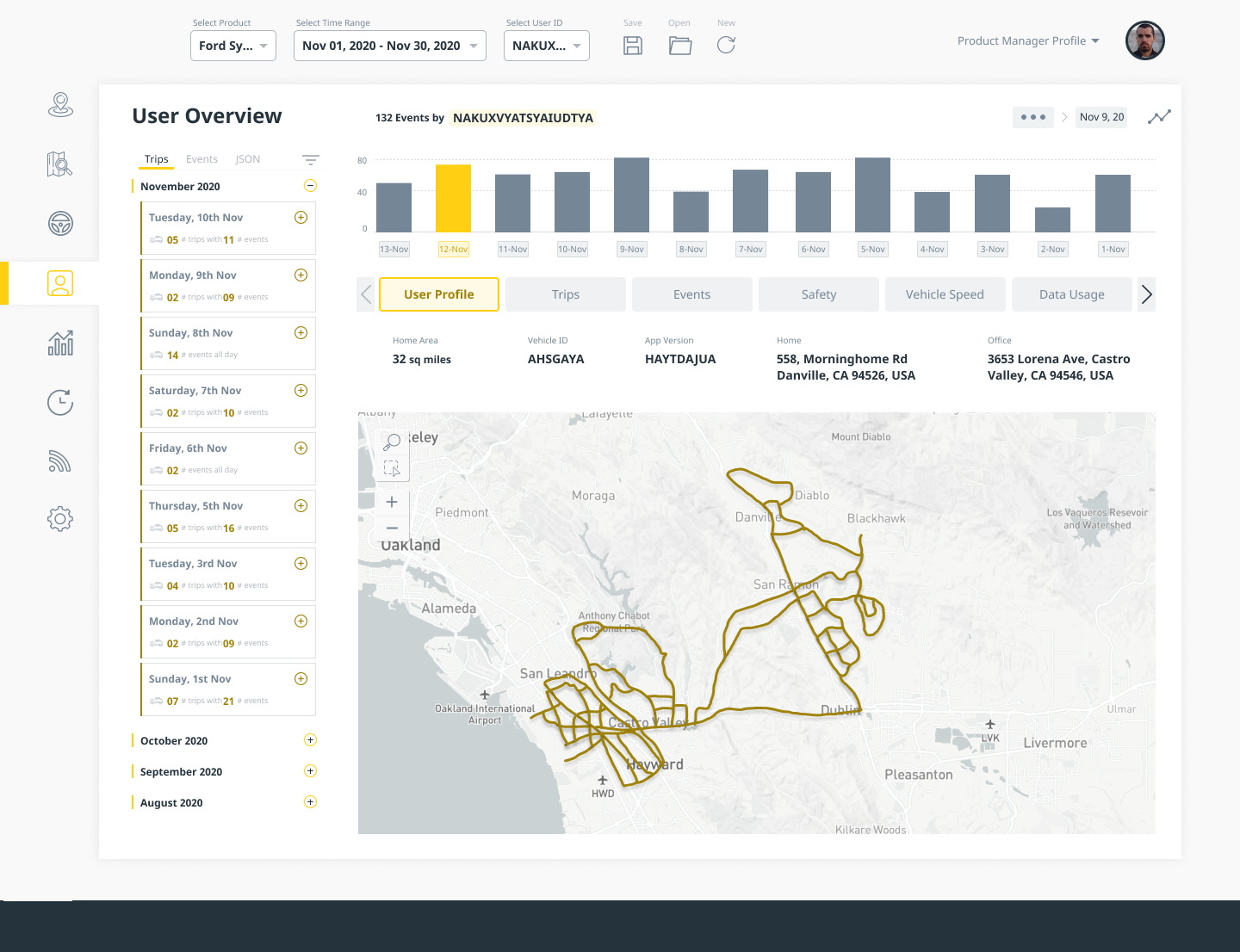
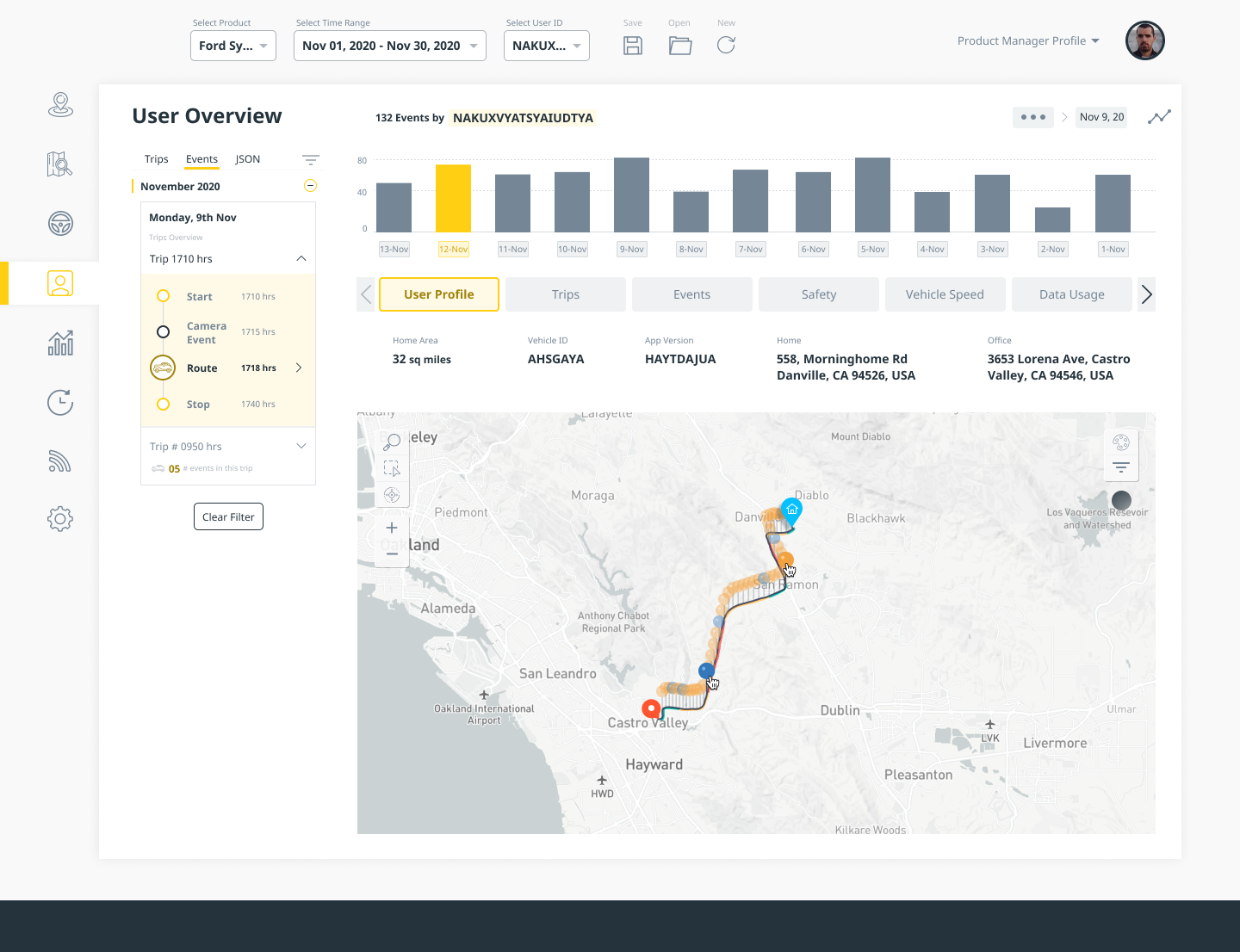
- Event Overview: Real-time system activity, high-usage patterns, failure spikes
- Content Interaction: Promoted content usage heatmaps and conversion tracking
- User Segments: Geo-device-firmware breakdowns with behavioral markers
- Performance by Region: Distribution of events and latency KPIs by geography
- Revenue Optimization: Overlay of usage patterns with sponsored content and user attention metrics
- Segment-aware filtering: Preserved state across dashboards
- Quick Compare Tool: Visualize multiple user cohorts in a easy and consumable format for the users
- Mini-insight cards: Smart contextual flags and suggestions
- Custom alert builder: Users could set behavioral or performance-based triggers based on the product insights
Results & Impact
(Estimated)
- Decision time dramatically dropped from a few hours to a few minutes. On an average that resulted in about ~90% faster decision making
-
Research time went down by upto ~80% and accuracy went up by a staggering 200%. It was achieved by now measuring regionwise user churn using pattern driven flags.
-
The platform had achieved a unified KPI language across OEM partners and product managers.
-
This also meant there was reduced reliance on data teams for simple insights
-
It enabled proactive roadmap pivots based on behavioral intelligence
-
The best part was it fostered deeper OEM collaborations due to transparent shared analytics
This platform turned raw navigation telemetry into a high-impact product and business intelligence engine, helping users make informed, timely, and strategic decisions that shape both user experiences and revenue outcomes for the business.
.
Other products

Biofuels compliance
Role
Expereince design lead
Contribution
Designed a universal, scalable ingestion interface capable of adapting to evolving document formats.
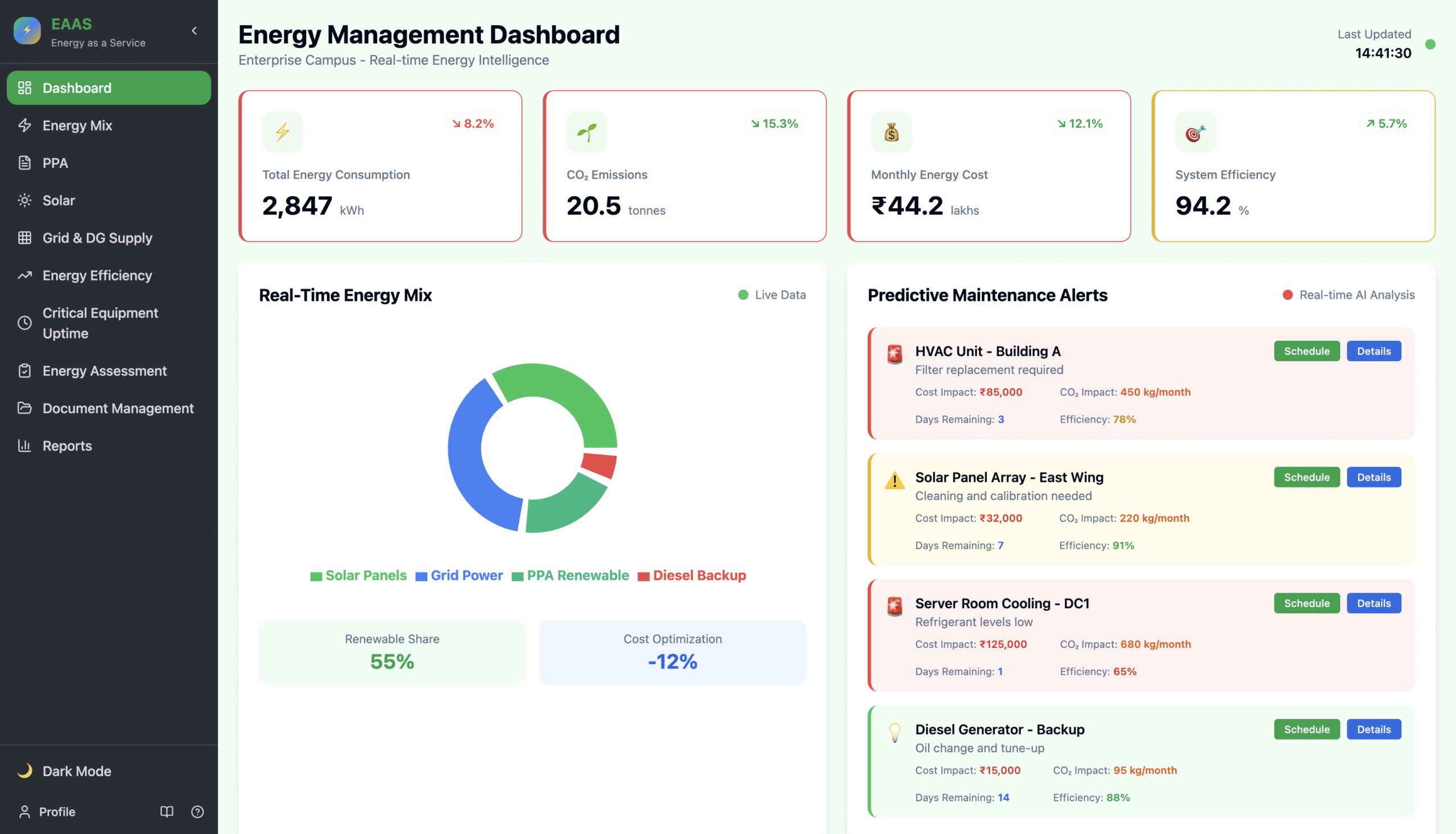
Energy management
Role
Expereince design lead
Contribution
Lead the design team from partner company and conceptualised the entire design of this modern energy management platform.